
 Russ Ware
What is THC-B?
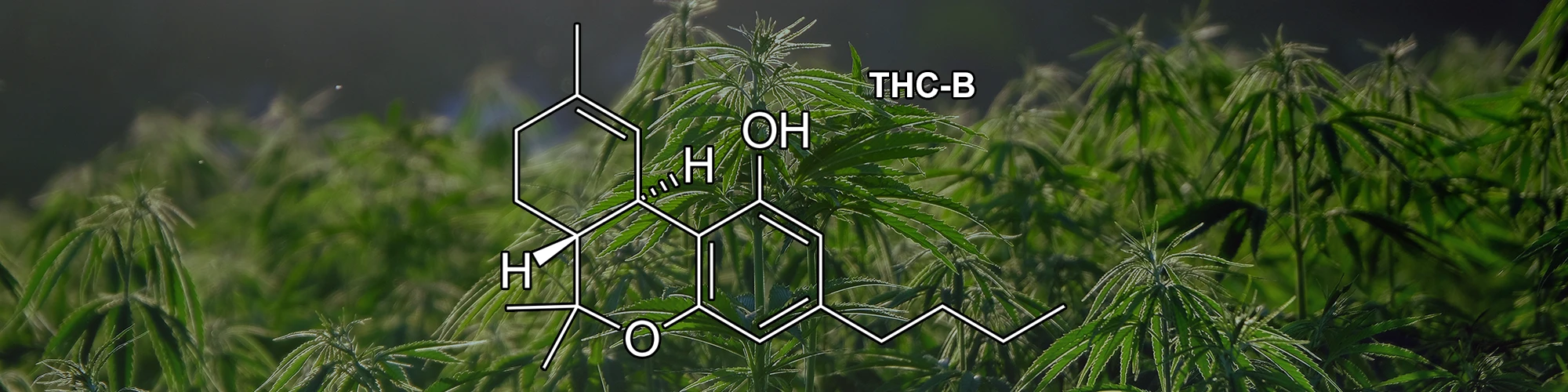
THC-B (also known as Tetrahydrocannabutol or butyl-THC) is relatively new and unstudied cannabinoid that has gained attention in the cannabis world in the last few years. There are over 110 phytocannabinoids known to science currently, and like all of those others, THC-B occurs naturally within cannabis plants. However, unlike something like CBD or Delta 9 THC, THC-B is found in trace amounts, which makes extracting it complex and expensive.
First identified through advanced cannabis research relatively recently, the rarity of THC-B actually places it in the sub-category of minor cannabinoids. Structurally, THC-B is similar to Delta 9 THC (it is technically known as a homologue of THC), with only a few carbon atoms in the side chain marking the difference. But even such seemingly minor differences can result in a cannabinoid producing markedly different effects when used.
As of today, detailed knowledge of its effects and potential applications is only just starting to be gathered, so how much of a difference is unknown. Reports by some THC-B users suggest that it could be more potent than the likes of Delta 9 and Delta 8 THC, while others say that the high is distinct in other ways such as increased focus and positive mood.
Does THC-B Have Psychoactive Effects?
Yes, THC-B has been shown to have psychoactive effects. THC-B binds to the CB1 receptors in the brain just like other psychoactive cannabinoids. These CB1 receptors are responsible for the intoxicating effects cannabis produces.
Unlike non-intoxicating cannabinoids such as CBD, THC-B’s psychoactivity positions it closer to Delta 8 and Delta 9 THC. Reports by some users who have experimented with THC-B suggest that the effects can be intense but manageable, while others describe the high as more focused and uplifting.
The potency of any psychoactive cannabinoid can vary significantly depending on the dose, product quality, method of consumption, and the user’s body composition and internal chemistry. Because the effects of THC-B have been so little studied (we could find no studies that have investigated its affect on humans) it is important to approach its use with caution.
THC-B Vs Delta 9 THC – Potency, Availability, and Effects
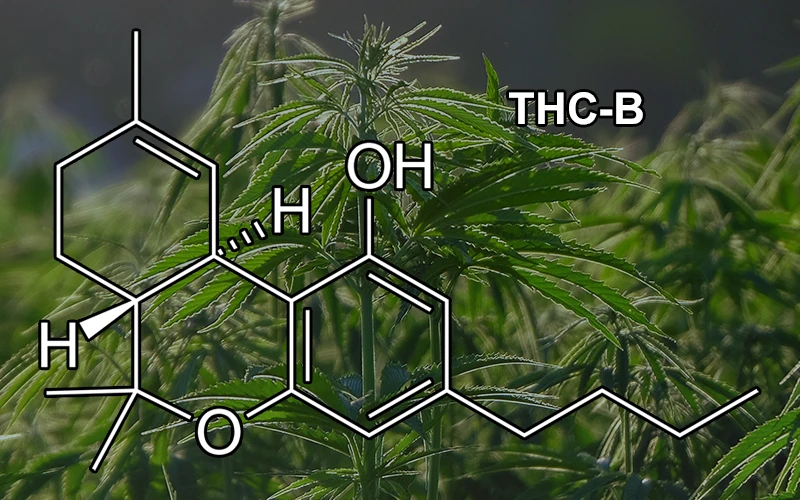
THC-B and Delta 9 THC share some similarities but differ in a few key ways.
The main distinction between THC-B and D9 THC is their molecular structure. THC-B has a slightly different carbon chain structure from Delta 9 THC, which is thought to influence how it interacts with the body’s endocannabinoid receptors. The variation is likely behind the differences in potency and effects when used.
There has been little research into the effects of THC-B, but some studies suggest that it binds to the CB1 receptors in the brain even more effectively than Delta 9 THC. This more effective CB1 binding means that it is potentially more potent and could produce stronger psychoactive effects than its better-known sibling.
Another key difference is availability. Depending on the state you live in, Delta 9 THC is more widely available for medicinal and recreational use than the relatively new THC-B. In states where Delta 9 from cannabis is legal, that will definitely be the case. THC-B is currently a niche cannabinoid and is likely to remain so until extracting or isolating it is made more cost-effective.
This lack of availability combined with a general lack of study means that it is difficult to find either scientific or anecdotal evidence on the effects of THC-B compared to Delta 9 THC. The euphoric and relaxing effects of using Delta 9 are well documented, but while THC-B has the potential to provide different or more nuanced effects, the full range of its psychoactive properties is still being explored.
Is THC-B Safe to Vape?
THC-B’s relative rarity means it does not often appear in single-cannabinoid products. It is far more likely to be found in products that blend cannabinoids such as gummies and THC vape carts. As should now be clear, there has been little research done into THC-B, and that certainly also applies to vaping this cannabinoid.
The safety level of vaping THC-B largely depends on the quality of the product and how it is consumed. However, as long as it has not been blended with additives such as Vitamin E Acetate (which is known to cause respiratory harm) there is no reason to think that vaping THC-B is any more unsafe than vaping Delta 8, Delta 9, or even CBD.
The usual precautions should be applied, such as buying THC-B products from reputable brands, ensuring it has had third-party lab testing, and vaping sensibly and responsibly. If you are new to vaping cannabinoids in general and THC-B in particular, it is advisable to begin with small doses. The potential for higher potency and the likelihood that vaping will provide any effects more rapidly than other consumption methods means that being cautious is key to making vaping THC-B as safe as possible.
Potential Benefits of Using THC-B
Despite research into the potential benefits of THC-B still being minimal, there are promising indications that it could offer several.
Anxiety and Stress: Like many similar cannabinoids, some users report that using THC-B promotes relaxation. Aside from the appeal this might have for recreational users, it could also be useful for managing diagnosed stress and anxiety.
Pain Relief: There have been numerous studies into the analgesic (pain relieving) properties of Delta 9 THC. Because THC-B is so similar to Delta 9 and binds to the B1 receptors in the same way (and perhaps even more effectively), there is some suggestion that this minor cannabinoid could help with chronic pain, inflammation, and discomfort caused by certain medical conditions.
Appetite Stimulation: THC-B might also stimulate appetite in the same way that Delta 9 THC does. If so, it could be used medically by individuals who are suffering from appetite loss due to treatments or ongoing medical conditions.
COVID-19 Treatment: A 2022 study has suggested that THC-B could be beneficial as a treatment for managing COVID-19 (and potentially, similar viruses that appear in the future). The study appears to show that it provided more therapeutic effects than several other cannabinoids, including THCV and THCP, tested alongside it.
It’s important to note that these potential benefits are based on limited scientific evidence. We are still a fairly long way away from seeing THC-B being commonly used as a medical treatment.
Is THC-B Legal for Recreational Use?
The legal status of THC-B in the United States is as complicated as for any other cannabinoid. As a so-called minor cannabinoid, it is not explicitly listed as illegal under the Controlled Substances Act, but the legality of its sale and use depends largely on how it is sourced and how individual states choose to control these types of substances.
Federal Law: Under the 2018 Farm Bill, products derived from hemp that contain less the 0.3% Delta 9 THC are federally legal. Assuming THC-B is derived from hemp (and not cannabis plants) and meets the other criteria, it should be considered legal. However, there is a grey area around the synthetic production of some cannabinoids which means it might be classified as a controlled substance.
State Laws: The individual state laws on cannabinoids vary widely. Many states follow the federal guidelines, but some have decided to ban all THC isomers and derivatives. This would very likely include minor cannabinoids like THC-B. Being aware of the cannabis laws in your state is essential if you want to stay out of trouble.
Outside of the United States, the laws controlling the sale and use of THC-B are even more mixed. As a general rule, U.S. citizens traveling outside of the country should avoid carrying THC-B products unless VERY sure about the import and use legalities in their destination country.
Will THC-B Show Up on a Drug Test?
Even in states where cannabis is legal, employers may still have zero tolerance for THC. And if you wish to avoid failing a drug test, we would wholeheartedly suggest not using THC-B in the days or even weeks leading up to it.
Most standard drug tests screen for THC metabolites, which are produced in the liver as the body breaks down cannabinoids. Once again, there has been very little study done on this, but at least one backs up the idea that butyl homologues of Delta 9 THC (like THC-B) are metabolized in a similar way to Delta 9 THC and therefore very likely to be picked up in a standard test.
The most common type of drug test is the urine test, which can be highly sensitive to THC. But even the less common hair and blood tests are likely to detect the presence of THC metabolites. If you know you will be subject to drug testing, it is safer to avoid using THC-B.
The Bottom Line
THC-B is an interesting and potentially useful new minor cannabinoid. However, there is still much to be learned about the effects, safety, and potential benefits of using it both recreationally and medically.
While it shares several similarities with Delta 9 THC, its seemingly unique properties could make it a valuable addition to the growing catalog of cannabinoids available today. As always with little-studied cannabinoids, approach its use with caution and ensure you only buy high-quality, lab-tested products from reputable manufacturers.


 Versed Vaper Team




Add comment